Duty Blind Spots: How American Importers Are Getting Japan's Tariff Math Wrong — and Paying for It
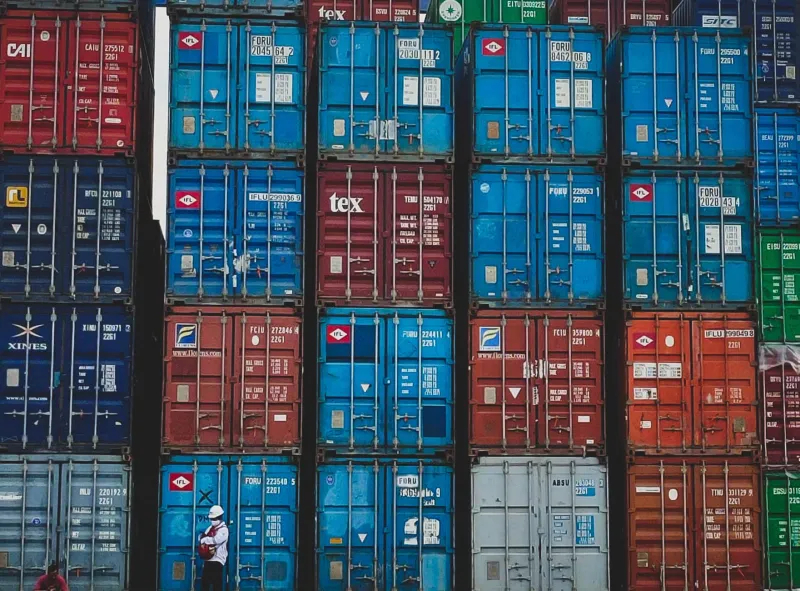
For many US companies, Japan represents a premier sourcing destination — precision-engineered components, advanced materials, and specialized consumer goods that are difficult to replicate elsewhere. Yet a growing number of American importers are discovering that the financial assumptions underpinning their Japan procurement strategies are quietly coming apart. The culprit, more often than not, is not macroeconomic volatility or supply chain disruption. It is something far more technical, and far more fixable: tariff miscalculation.
As the bilateral trade relationship between the United States and Japan continues to evolve — shaped by renegotiated frameworks, sector-specific agreements, and shifting customs enforcement priorities — the margin for error in duty planning has narrowed considerably. Companies that built their cost models on outdated classifications or incomplete knowledge of applicable trade instruments are now absorbing charges they were never meant to pay.
The Classification Problem Is Bigger Than Most Companies Realize
At the heart of most tariff disputes is the Harmonized Tariff Schedule, the classification system that determines what duty rate applies to a given product. In theory, the process is straightforward: identify the correct code, apply the corresponding rate, and factor the result into your landed cost. In practice, the system is anything but simple.
Japanese exports to the United States span an enormous range of product categories, many of which sit at the boundary between two or more HTS classifications. Automotive parts that incorporate electronic control systems, for instance, may qualify under mechanical components, electronic assemblies, or hybrid subassemblies — each carrying a different duty rate. Industrial machinery with embedded software creates similar ambiguity. When procurement teams or logistics providers default to a familiar code rather than conducting a rigorous classification review, the result is either overpayment or, worse, underpayment followed by a customs audit and retroactive liability.
US Customs and Border Protection has increased its scrutiny of Japanese-origin goods in several categories over the past few years, particularly in electronics, advanced ceramics, and precision instruments. Companies that have not revisited their classification decisions since their initial market entry are operating with assumptions that may no longer hold.
Preferential Provisions That Go Unused
Beyond classification errors, there is a separate and arguably more costly problem: the systematic underutilization of favorable trade provisions that American importers are legally entitled to claim.
The US-Japan Trade Agreement, which entered into force in January 2020, eliminated or reduced duties on a defined set of agricultural and industrial goods. While the agreement's scope is more limited than a comprehensive free trade agreement, it contains meaningful tariff concessions that a surprising number of importers have never activated. Claiming these benefits requires documentation — specifically, certification of origin that satisfies the agreement's rules of origin requirements — and many companies either lack the internal processes to generate that documentation consistently or are unaware that the provision applies to their product category.
Separately, the Generalized System of Preferences, though its applicability to Japanese goods is limited given Japan's status as a developed economy, occasionally intersects with goods processed through third countries before reaching the United States. Supply chains that route through Southeast Asian facilities, for example, may create origin complexities that either open or foreclose preferential treatment, depending on how value addition is structured and documented.
The financial stakes are not trivial. On high-volume import programs, the difference between a 3.5 percent duty rate and a zero-rate preferential provision can translate to hundreds of thousands of dollars annually — funds that currently flow to the US Treasury rather than back to the importing company's operating margin.
How the Current Trade Environment Is Reshaping the Calculus
The broader US-Japan trade relationship is in a period of active renegotiation and recalibration. Discussions around a more comprehensive bilateral trade framework have been ongoing, with particular attention to digital trade, pharmaceutical supply chains, and critical minerals. Each of these conversations carries potential implications for duty treatment, import licensing requirements, and sector-specific compliance obligations.
For US importers, the practical challenge is anticipating how current sourcing strategies will perform under trade terms that may shift within the next one to three years. Companies heavily reliant on Japanese semiconductor components, for instance, are navigating a landscape where both governments are simultaneously competing and cooperating — with policy decisions that can alter cost structures with limited advance notice.
There is also a less-discussed dimension involving anti-circumvention enforcement. As trade tensions with other Asian economies have intensified, US customs authorities have become more attentive to the possibility that goods are being transshipped through Japan to obscure their true origin. American importers sourcing through Japanese trading companies or distributors who in turn source components from third countries need to be especially rigorous about origin documentation. Enforcement actions in this area have increased, and the penalties for non-compliance — whether intentional or inadvertent — are significant.
Practical Steps for Importers Ready to Address the Gap
Addressing tariff miscalculation is not a one-time exercise. It requires embedding a more disciplined approach into procurement and trade compliance workflows on an ongoing basis.
The first priority is a classification audit. For any product category representing material import volume, companies should conduct a fresh review of HTS classifications, ideally with input from a licensed customs broker or trade attorney familiar with Japanese-origin goods. The goal is not simply to confirm existing codes but to identify whether alternative, more favorable classifications are defensible given the product's actual specifications.
The second step is a systematic review of preferential trade agreement eligibility. This means mapping each product line against the US-Japan Trade Agreement's tariff schedule, identifying applicable concessions, and establishing the documentation processes needed to claim them reliably. For companies sourcing through Japanese distributors rather than directly from manufacturers, this may require renegotiating supplier agreements to include origin certification as a contractual deliverable.
Third, companies should invest in scenario planning around potential trade policy changes. This does not require predicting the outcome of diplomatic negotiations, but it does mean stress-testing current sourcing models against a range of duty rate scenarios and identifying the thresholds at which alternative sourcing geographies or supply chain structures become financially attractive.
Finally, internal alignment between procurement, finance, and trade compliance functions is essential. Tariff miscalculation persists in many organizations not because of a lack of expertise, but because the people responsible for sourcing decisions and the people responsible for customs compliance operate in separate organizational silos. Closing that gap is, in many cases, the highest-return investment a US importer can make.
The Bottom Line
Japan remains one of the most strategically important sourcing partners for American companies across a wide range of industries. The quality, reliability, and technological sophistication of Japanese-origin goods are not in question. What is in question is whether US importers are capturing the full financial benefit of those sourcing relationships — or quietly subsidizing inefficiencies that a more rigorous trade compliance posture could eliminate.
In an environment where every basis point of margin matters, the cost of getting Japan's tariff math wrong is a liability that no company can afford to ignore.