Japan's Demographic Time Bomb Is Reshaping Manufacturing — and US Supply Chains Are Already in the Blast Radius
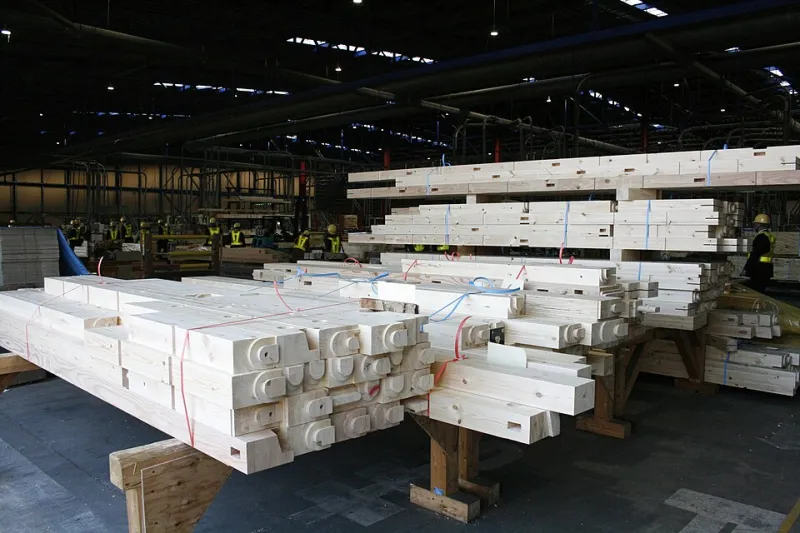
Photo: BC Council of Forest Industries (COFI), CC BY 2.0, via Wikimedia Commons
For decades, Japan's manufacturing sector has been celebrated for its precision, reliability, and process discipline — qualities that made it an indispensable partner for US companies across industries ranging from automotive and electronics to aerospace and medical devices. But a structural force that has been building quietly for years is now accelerating at a pace that demands attention from American procurement leaders and supply chain strategists alike.
Japan is aging faster than almost any other developed economy on earth. With more than 29 percent of its population now over the age of 65 — a figure the World Bank projects will climb further through the 2030s — the country is confronting a labor scarcity that no amount of productivity improvement alone can fully offset. On the factory floor, this translates into a workforce that is simultaneously shrinking and becoming more expensive to retain. For US firms that have long treated Japanese suppliers as stable, cost-efficient partners, that assumption deserves a hard second look.
The Wage Inflation Signal Most US Buyers Are Ignoring
Japan's manufacturing wages have historically been a point of competitive advantage relative to other high-skill economies. That advantage is narrowing. As the pool of available skilled workers contracts, Japanese manufacturers are being forced to raise compensation to attract and retain talent — a dynamic that accelerated sharply following the government's public pressure campaigns on major corporations to lift base salaries.
For US companies that negotiate multi-year supplier contracts priced in yen, the compounding effect of wage inflation and currency fluctuation creates a procurement risk that many cost models have not yet internalized. Finance teams focused on yen-dollar exchange rates may be missing a second, slower-moving variable: the underlying labor cost structure of their suppliers is changing regardless of what the currency does.
Small and mid-sized Japanese manufacturers — particularly those operating in second- and third-tier supplier roles — are under the most acute pressure. Unlike large integrated manufacturers with capital reserves to invest in automation, these firms often lack the resources to replace departing workers with robotic systems at the speed the market demands. Some are reducing operating hours. Others are consolidating production lines. A few are quietly exiting certain product categories altogether. US buyers who have not engaged directly with their suppliers on workforce continuity plans may be operating with outdated assumptions about capacity and lead times.
Automation as a Structural Response — Not a Competitive Choice
Japan's accelerated investment in industrial robotics and factory automation is widely covered as a story of technological ambition. In reality, for a growing number of manufacturers, it is less a strategic choice than a survival necessity. The labor simply is not available to sustain production at previous volumes and cost structures.
Japan already holds one of the highest robot density rates in the world — approximately 399 industrial robots per 10,000 manufacturing workers, according to the International Federation of Robotics. That figure is rising. Government incentive programs, combined with competitive pressure and the urgent need to offset workforce attrition, are pushing manufacturers of all sizes toward greater automation investment.
For US supply chain managers, this shift carries a nuanced set of implications. On one hand, automation investment may preserve — or in some cases improve — the quality consistency and production reliability that made Japanese suppliers attractive in the first place. On the other hand, the capital expenditure required to automate is not cost-neutral. Suppliers will seek to recover those investments somewhere, and procurement teams that have not built flexibility into their pricing frameworks should anticipate renegotiation requests.
US firms that proactively engage their Japanese supplier base on automation roadmaps — rather than waiting for cost increases to appear on invoices — will be better positioned to co-develop solutions that distribute the adjustment burden more equitably.
Supply Chain Restructuring Is Already Underway
Beyond individual supplier dynamics, Japan's demographic pressures are driving broader structural shifts in how manufacturing is organized across the country. Regional production clusters that once thrived on dense networks of specialized small manufacturers are thinning as older proprietors retire without successors. In some industrial prefectures, the consolidation of supplier capacity is already visible in longer lead times and reduced flexibility on custom specifications.
For US companies with complex bills of materials sourced from multiple Japanese vendors, this consolidation introduces concentration risk that may not yet appear on risk registers. A supply chain that previously drew on five specialized component manufacturers in a given region may effectively be drawing on two or three as consolidation proceeds — without any formal notification to US buyers.
This is a moment that rewards proactive supplier mapping. US procurement teams that have relied on tier-one suppliers to manage upstream relationships should consider investing in deeper visibility into their supplier networks. Understanding where workforce gaps and consolidation pressures are most acute allows for contingency planning before disruptions materialize rather than after.
Rethinking Procurement Strategy for a Japan in Transition
The strategic response to Japan's demographic transformation is not to disengage from Japanese suppliers — the quality, precision engineering capability, and institutional knowledge embedded in Japan's manufacturing ecosystem remain genuine competitive assets. The appropriate response is to engage differently.
Several adjustments merit consideration for US firms operating in or sourcing from Japan.
First, contract structures should reflect the reality of a changing cost environment. Multi-year fixed-price agreements that do not incorporate labor cost escalation provisions are increasingly misaligned with market conditions. Building in structured review mechanisms — tied to published wage indices or automation investment milestones — creates a more durable commercial relationship.
Second, dual-sourcing strategies warrant reconsideration for components currently sourced exclusively from Japanese manufacturers facing acute workforce pressure. This does not require abandoning Japanese suppliers; it means building redundancy into the network in a deliberate, planned manner rather than scrambling to do so after a supply disruption.
Third, US companies with significant Japan supplier exposure should incorporate demographic and labor market data into their annual supplier risk assessments. The workforce contraction affecting Japanese manufacturing is not a speculative risk — it is a documented trend with measurable trajectory. Treating it as such within formal risk frameworks elevates it to the level of strategic attention it warrants.
The Window for Proactive Adjustment Is Open — For Now
Japan's demographic trajectory is not reversible in any near-term timeframe. The question for US manufacturers and procurement leaders is not whether these pressures will affect their supply chains, but when — and how prepared they will be when they do.
The firms that will navigate this transition most effectively are those that treat Japan's aging workforce not as a distant macroeconomic abstraction, but as an operational variable already embedded in their supplier relationships. Engaging Japanese partners now — on automation plans, workforce succession, pricing expectations, and capacity commitments — creates the foundation for supply chain resilience that reactive procurement strategies cannot provide.
For US companies that have built competitive advantages on the back of Japan's manufacturing excellence, preserving access to that excellence in a transformed labor environment requires a strategy calibrated to the Japan that exists today, not the one that existed a decade ago.