Beyond Tokyo: How American Tech Firms Are Quietly Transforming Japan's Regional Innovation Landscape
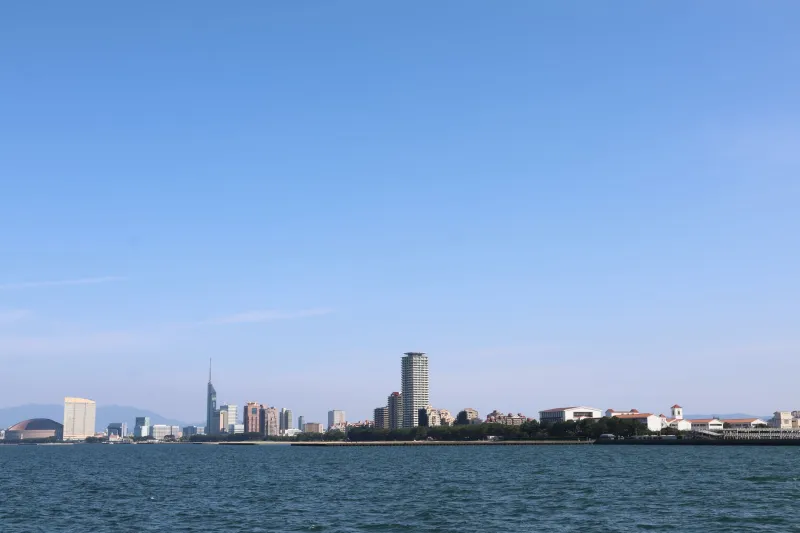
For decades, Tokyo served as the near-universal entry point for American companies seeking a foothold in Japan. The capital's dense concentration of corporate headquarters, financial institutions, and international infrastructure made it the default choice. Yet a discernible shift is underway. US technology firms — from established multinationals to growth-stage startups — are increasingly planting their research and development flags in cities that, until recently, rarely appeared on the radar of foreign business strategists.
Fukuoka on the southwestern island of Kyushu, Nagoya in the industrialized Chubu region, and Sapporo in the northern reaches of Hokkaido are emerging as credible alternatives to the capital. Understanding why requires a closer examination of the economic, governmental, and cultural forces converging to make Japan's regional cities genuinely compelling destinations for R&D investment.
The Cost Equation: A Compelling Case Outside the Capital
Operating costs in Tokyo rank among the highest of any city in Asia for multinational employers. Office space in central districts such as Marunouchi or Shinjuku commands premiums that rival Midtown Manhattan. When American firms begin calculating the full burden — real estate, competitive salary expectations, employee cost-of-living allowances — the numbers can give pause even to well-capitalized organizations.
Regional cities present a meaningfully different picture. Commercial office rents in Fukuoka, for instance, run roughly 40 to 60 percent below comparable Tokyo rates, depending on the district and specifications. Residential costs for employees follow a similar pattern, which reduces pressure on compensation packages and relocation stipends. For R&D operations where capital is typically directed toward talent and equipment rather than prestige addresses, this differential is not trivial — it can determine whether a facility becomes financially sustainable within a three-year horizon or stretches toward five.
Nagoya offers a distinct variant of this cost argument. As the home base of Toyota Motor Corporation and a sprawling ecosystem of automotive and advanced manufacturing suppliers, the city already hosts world-class engineering infrastructure. American firms in robotics, semiconductor design, and industrial AI have recognized that embedding within this environment — at lower overhead than Tokyo would require — provides both economic and strategic advantages simultaneously.
Specialized Talent Pools That Tokyo Cannot Replicate
The assumption that Tokyo holds a monopoly on Japan's technical talent deserves scrutiny. Japan's national university system distributes research excellence broadly across the country. Tohoku University in Sendai has long maintained a global reputation in materials science and engineering. Kyushu University in Fukuoka produces graduates in information science and environmental technology at a scale that supports a robust local labor market. Hokkaido University contributes meaningfully to agricultural technology, data science, and life sciences research.
For US companies pursuing highly specific research agendas, proximity to these institutions can prove more valuable than proximity to Tokyo's general talent market. Several American semiconductor and AI firms have structured their regional R&D centers explicitly around university partnership agreements, establishing joint research programs that provide access to graduate researchers, laboratory facilities, and faculty expertise that would otherwise require significant independent capital investment.
Fukuoka has become particularly notable in the software and digital technology sectors. The city's relatively young demographic profile — it ranks among Japan's youngest major cities by median age — combined with an active startup community has created an environment where engineering talent is both available and culturally aligned with the iterative, collaborative pace that technology R&D demands.
Government Incentives: National Policy Meets Local Ambition
Japan's national government has made attracting foreign direct investment into regional economies an explicit policy priority. The "Regional Revitalization" initiative, known in Japanese as Chihou Sousei, allocates substantial resources toward making secondary cities more competitive destinations for both domestic and international business. For foreign technology firms, this translates into tangible support mechanisms.
Fukuoka's designation as a "Global Startup City" brought with it a simplified visa process for foreign entrepreneurs and relaxed regulatory requirements in designated zones. American founders and senior technical staff have found that establishing operations there involves meaningfully less bureaucratic friction than might be expected from Japan's reputation for administrative complexity.
At the municipal level, competition among regional cities for foreign investment has produced aggressive incentive packages. Subsidies for facility construction or renovation, grants tied to local hiring targets, and preferential tax treatment during initial operating years are common offerings. Several prefectural governments have stationed dedicated investment promotion staff in the United States — including in Silicon Valley and New York — specifically to engage American firms in direct conversation about relocation or expansion opportunities.
US companies should note that navigating these incentive structures benefits substantially from local advisory support. The specifics of eligibility, application timelines, and compliance requirements vary considerably by municipality, and the documentation processes often remain primarily in Japanese.
Cultural Factors: The Underappreciated Variable
Beyond the financial and policy dimensions, cultural dynamics play a role that American executives sometimes underestimate during initial feasibility assessments. Regional Japanese cities tend to operate with a stronger sense of community cohesion and institutional loyalty than Tokyo's more transient professional environment. Employee retention rates at foreign-affiliated companies in cities like Nagoya and Sapporo have, in several documented cases, outperformed comparable Tokyo operations — a meaningful consideration for R&D teams where accumulated institutional knowledge directly affects project continuity.
Regional cities also offer American staff and their families a quality-of-life proposition that can ease the challenge of international relocation. Lower population density, shorter commutes, accessible nature, and strong local food culture have factored into the personal decisions of technical employees accepting assignments in these locations. Firms that have invested in understanding and communicating these lifestyle dimensions during recruitment have reported stronger acceptance rates for relocation offers.
A Practical Framework for US Companies Evaluating Regional Japan
For American technology companies assessing whether a regional Japanese R&D center aligns with their strategic objectives, several practical considerations warrant early attention.
Define the research mandate first. The optimal regional location depends heavily on the specific technical domain. Automotive and manufacturing AI points toward Nagoya. Software, fintech, and consumer technology lean toward Fukuoka. Life sciences and agricultural technology benefit from Hokkaido's ecosystem. Matching the research agenda to the regional specialization is more important than selecting a city based on general reputation alone.
Engage with JETRO early. The Japan External Trade Organization maintains offices across the United States and provides no-cost advisory services to foreign companies evaluating market entry. Their regional specialists can facilitate introductions to municipal governments, university technology transfer offices, and local industry associations — connections that would otherwise require months of independent relationship-building.
Plan for a bilingual operational structure. Even in internationally oriented regional cities, day-to-day R&D operations will function primarily in Japanese. Building a leadership team that bridges both languages and organizational cultures — rather than relying on translation as a patch — is a structural decision that pays dividends throughout the facility's operational life.
Allow adequate timeline. Site selection, incentive negotiation, facility preparation, and initial hiring in a Japanese regional context typically require 18 to 24 months from initial decision to operational readiness. Companies that have underestimated this timeline have encountered avoidable delays and cost overruns.
The Broader Significance for US-Japan Business Relations
The movement of American R&D investment into Japan's regional cities carries implications that extend beyond individual company strategies. It represents a maturation of the US-Japan business relationship — a shift from market access and sales-driven engagement toward deeper, longer-term collaborative investment in knowledge creation. For the cities involved, the presence of American technology firms accelerates the internationalization of local business culture and creates spillover benefits for domestic startups and research institutions.
For ICN Japan's readership — executives, investors, and advisors navigating the US-Japan commercial corridor — this trend signals that the geography of opportunity in Japan is expanding. Tokyo remains essential, but it is no longer the only answer. The companies that recognize this early, and invest the time to understand what Japan's regional cities genuinely offer, may find themselves with a structural advantage that is difficult for later entrants to replicate.